
To access digital content, apply online for a Whitby Public Library eCard.
To check out physical materials, visit any Whitby Public Library location and show your current Ontario's driver's license or Ontario Photo Card, or present two pieces of identification--one with your current address on it. See below for examples of acceptable forms of identification if you do not have photo ID.
The cost to replace a lost card is $2.00. Protect your library card as you would your credit cards. Contact us to report lost or stolen cards immediately. Anything checked out using your card is your responsibility until the card is reported missing.
Library cards are free to:
- Anyone who lives, works, pays taxes or attends school in Whitby.
- Residents of Durham Region.
- People who live on a First Nations reserve anywhere in Ontario and self-identify as Indigenous.
- Non-residents who attend Ontario Tech University, Trent University (Oshawa Campus), or Durham College with proof of school I.D. and a home address.
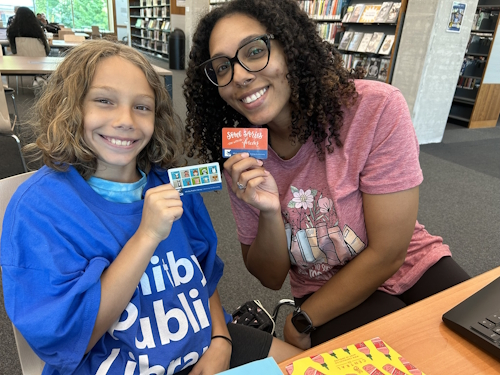
Non-residents living outside Durham Region may purchase a membership for $45.00 per year. Those living in Whitby on a short-term basis can apply for a temporary card with a refundable $10.00 deposit and two item check-out limit.
Identification
Acceptable forms of identification may include but are not limited to:
- utility bill
- tax bill
- birth certificate
- credit card
- current mortgage, rental or lease agreement
- any benefit statement issued by the Government of Canada
- insurance policy
- school report card or transcript
Access Cards
Access cards are available to individuals who do not have a permanent address, do not have identification, or prefer not to provide identification that includes their address. Access memberships provide the ability to sign in to the Library’s public computers, which requires a library card login. Access memberships are not eligible to borrow library materials, place holds, or access services that require borrowing privileges; however, they can be updated to any other applicable membership type at any time by providing photo identification. This membership is intended to ensure that all community members can use essential in-library technology and the internet regardless of their housing status or ability to provide identification.
First Nations Reserve Membership
We acknowledge that this land is home to many diverse First Nations, Inuit, and Métis peoples. The Whitby Public Library provides free memberships to Indigenous Peoples living on a First Nations reserve anywhere in Ontario.
Why does the Library offer free membership to people who live on a First Nations reserve anywhere in Ontario?
The Whitby Public Library recognizes its role in supporting the Truth and Reconciliation Commission's Call to Action #69, which emphasizes Indigenous peoples’ inalienable right to know the truth about what happened and why regarding human rights violations committed in residential schools. Providing equitable access to the Library's collections is a meaningful way to empower First Nations communities to engage with resources that support learning, healing, and the preservation of Indigenous history, cultures, and knowledge.
This initiative aligns with the United Nations Declaration on the Rights of Indigenous Peoples (UNDRIP), which affirms Indigenous peoples’ rights to maintain and access their cultural heritage and educational materials, as well as the Joinet-Orentlicher Principles, which emphasize the right to truth and the preservation of memory in addressing human rights violations. By removing barriers to access, the Library can contribute to reconciliation and foster understanding between Indigenous and non-Indigenous communities.
Providing equitable access to information also supports the Canadian Federation of Library Associations’ Statement on Intellectual Freedom and Libraries, which affirms the right to freely access information. Ensuring access to materials that reflect Indigenous histories and cultures strengthens intellectual freedom and enables truth-telling and historical understanding essential to reconciliation.
What is Indigenous self-identification?
Indigenous self-identification gives individuals the ability to identify themselves as First Nations, Inuit, or Métis according to their own understanding of their ancestry, culture, and community connections, without the need to present documentation or external verification. The Library’s responsibility is to ensure services are accessible and welcoming, reducing barriers while honouring and supporting Indigenous knowledge systems, perspectives, and ways of being.